Category Archives: 2(e)(1)

What Issues Mattered in Trademark Prosecution in 2022?

As a trademark practitioner, you know that not all Office Actions are created equal. If your Office Action just raises an issue with a specimen or a disclaimer request, there may be some back-and-forth with your examining attorney, but the issue will almost certainly get resolved sooner or later. You can get a feel for how likely an issue is to be resolved prior to publication with our Office Action analysis tool and the Examiner analytics it provides.

If, however, you run into a functionality refusal or a likelihood of confusion refusal, you’re likely looking at at least one round of substantive back-and-forth. Applications running into these sorts of refusals move forward to publication at a much lower rate, as we’ve detailed in some prior blog posts.

What sort of refusals, then, did the USPTO tend to issue in 2022? The big ones were:

Substantive Refusals
Likelihood of Confusion23%
Descriptiveness18%
Non-Substantive Refusals
Specimen30%
Classification25%
Disclaimer22%
Mark description14%
Domicile12%
All numbers are a percentage of times an issue was raised in any Office Action in 2022. Many Office Actions contain multiple issues, so these percentages will not add up to 100%.

Foreign registration-related suspensions and applicant entity clarification requests were present in around 4% of Office Actions each. No other issue exceeded 2% frequency.

A few interesting points arise from this data, particularly the large numbers of non-substantive refusals.

The Office Should Change the Process for Assigning Mark Descriptions. Mark description issues are far more common than I expected. It might be more efficient for the Office to simply assign mark descriptions and allow applicants to object, similar to the process for design codes. That process is highly effective, and applicants rarely push back on the Office’s preferred design coding (or, indeed, the description of the mark phrasing). The change of process would permit some otherwise perfectly acceptable applications from either going abandoned for lack of a response, and speed examination time for almost all of the rest.

Classification Issues Aren’t Going Away. The heavy incentives towards TEAS Plus filing are not enough to eliminate identification woes. While the Office’s ever-widening price gap between TEAS and TEAS Plus is an attempt to mitigate this issue, it can’t solve the whole problem — indeed, it will never solve the issue for any Madrid-based applications. Only further efforts to create a worldwide equivalent of the ID Manual would not only help speed up prosecution in the US, but could address the maddening inconsistencies between what constitutes an acceptable definition goods in various countries. If WIPO could incentivize (e.g. through filing fees) use of such “universally accepted” language, it would be a big improvement for the international trademark system.

Disclaimer Practice is a Drag. Disclaimer requests are really, really common, popping up in over a fifth of Office Actions. Disclaimer practice in the US is riven with inconsistencies; the same term showing up in a short mark will get a disclaimer request; if the mark has a pun in it or if the term is used in a tagline that’s barely any longer, it’ll avoid a disclaimer request. It’s all very silly.

There has to be a better way. A simple, hard-and-fast rule would remove much of this back-and-forth. For example, the Office could adopt a rule that a term that is used in active registrations more than X times (3? 5?) by different owners in a single class is presumptively not likely to cause confusion with another mark, unless there is other evidence of mark similarity like other terms in the mark, visual presentation, etc. That would have two big benefits. First, it would dramatically simplify the confusion analysis. (As a side effect, it would stop the Office from issuing the annoying refusals where 6 companies own registrations for TERMX + SECOND TERM, someone slips through a registration for TERMX alone for narrow goods, and then every subsequent applicant for TERMX + SECOND TERM style marks gets a 2(d) refusal that they have to fight about.) Second, it would obviate the need for disclaimer practice. Just count!

As with mark description issues, some otherwise perfectly fine applications are either going abandoned over disclaimer requests, or have to deal with extra attorney fees to reply (and increased total prosecution time). Neither are a good outcome, and the Office should consider a wholesale revamp of the disclaimer practice to fix it.

Conclusion. Hopefully, we’ve not only given you some insight on the types of issues applicants are running into most often, but also provided some interesting ideas about how the Office could revamp its existing processes to better avoid unnecessary prosecution problems.

Finding the Right Ingredient – Finding Model 2(e)(1) Refusal Responses

You represent a client with a successful new Spanish-style restaurant chain, called “Saffron.” You helped file a trademark application for the mark for restaurant services, and the Examining Attorney issued a 2(e)(1) refusal, noting that saffron is an ingredient in some of the dishes served at the restaurant and concluding that it is thus merely descriptive of the restaurant services. How do you push back?

One great way is to look at the responses of other applicants who dealt with very similar objections, and successfully overcame them. Go to “Search” and then the “Office Action” tab. We’re looking for active registrations in Class 43 on the Principal Register that faced a 2(e)(1) refusal where the Examiner focused on the “ingredient” issue. Your search will look something like the strategy below:

The search yields over 600 relevant documents; on the first page of results alone, we have registrations like RED CHERRY, YUZU SUSHI, LA TAGLIATELLA, PICKLED LEMON, RED MANGO, MARGARITA COMPANY, and more; the second page yields more great examples like AOILI (stylized), BLACK GARLIC, FILINI, BONE & BROTH, and more.

We searched for outgoing Office Actions to hone in on the Examiner’s concerns, but finding relevant responses is simply. Click “Documents” to get a full list of TSDR history, and just click into the next Office Action Response to see how the applicant addressed the issue.

If you find a good example you like, click the magnifying glass and select the “Text” option – you can copy and paste plain text from this document to get your own arguments started.

The next time you face an Office Action with a unique fact pattern, make sure to use TM TKO to kick start your research to find and build on proven successful responses!

Building a Portfolio – the Chipotle Brand

Companies whose marks toe the descriptive-suggestive line can have complicated paths to “full” trademark protection on the US Principal Register. Let’s look at one what is now a well-known brand traveled the path to a strong registration portfolio – the house mark for Chipotle, the Denver-based fast Mexican chain. The company now has more than fifty active US filings, about half of which are registrations for its house mark or stylizations thereof. Andrew Roppel of Holland & Hart’s Boulder Office is the filing correspondent for the company’s US marks.

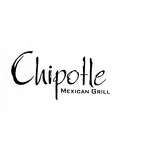
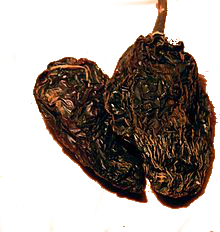
Chipotle’s first trademark registration was for CHIPOTLE MEXICAN GRILL & Design, shown below. The full prosecution history has never been scanned by the USPTO, but the application was filed in 1994 based on use since the prior year; a registration eventually issued on the Supplemental Register in late 1995. Why did it end up on the Supplemental Register? A chipotle pepper is a dried, smoked jalapeno pepper, either used on its own or packed in a spicy adobo sauce often used in Mexican cuisine, including in some of Chipotle Mexican Grill’s own food.

Chipotle_first
chipotle_dried

The company revisited its trademark portfolio in 1998, filing for the logo above, the word mark CHIPOTLE MEXICAN GRILL, and the word mark CHIPOTLE with 2(f) claims in 1998, eventually obtaining registrations for each in 2000. The company faced a 2(e) refusal for these re-filed applications. In response, it submitted extensive arguments arguing that CHIPOTLE was suggestive rather than descriptive, but the Office continued to refuse the mark as merely descriptive. A 2(f) claim based solely on 5 years’ use was sufficient to move forward to registration.

At the same time, the Office requested that the company disclaim CHIPOTLE and MEXICAN GRILL in the combined application. A response making a 2(f) claim and disclaimer of “Mexican Grill” overcame that issue, too.

The company’s expansion into prepared food products in 2005 generated similar issues, although, since the applicant was initially filed as an intent to use application, its 2(f) claim was initially refused on the grounds that (a) “chipotle” was more related to the applied-for foods than even restaurant services, and the distinctiveness for the prior registrations for services would not necessarily translate. The applicant was able to argue around the refusal based on the relationship between the goods and services, without having to fully paper out an evidence-based acquired distinctiveness claim. The application for CHIPOTLE alone for foods also ran into some prior-pending applications for BAJA CHIPOTLE for meat, CHIPOTLE BEEF PATTY for burgers, and CHIPOTLE for pizza, but each of them was abandoned prior to registration – the BAJA CHIPOTLE mark after an opposition by Chipotle Mexican Grill, the other two due to run of the mill prosecution inconveniences.

Chipotle has since obtained numerous registrations for variations of its house mark, all with little fuss – the 2(f) claims aren’t generating push-back from examiners any more, largely because most have probably eaten at a Chipotle restaurant at least once.

If you have a client facing a similar issue, TM TKO helps you research trademark prosecution histories, with more than ten million Office Actions and Responses that are fully searchable by issue, free-text, or any mark criteria that you can think of. Find the best examples of successful responses and evidence, mold the ideas and legal theories to your facts, and do your best work to help your clients succeed.