Author Archives: TM TKO

Dev Blog – Tech Upgrades and New Features

TM TKO has recently rolled out a significant upgrade to its back end platform. The changes should significantly speed up certain types of searches, especially certain types of manual searches and watches. The new back-end also opens up a lot of options for us from a development perspective.

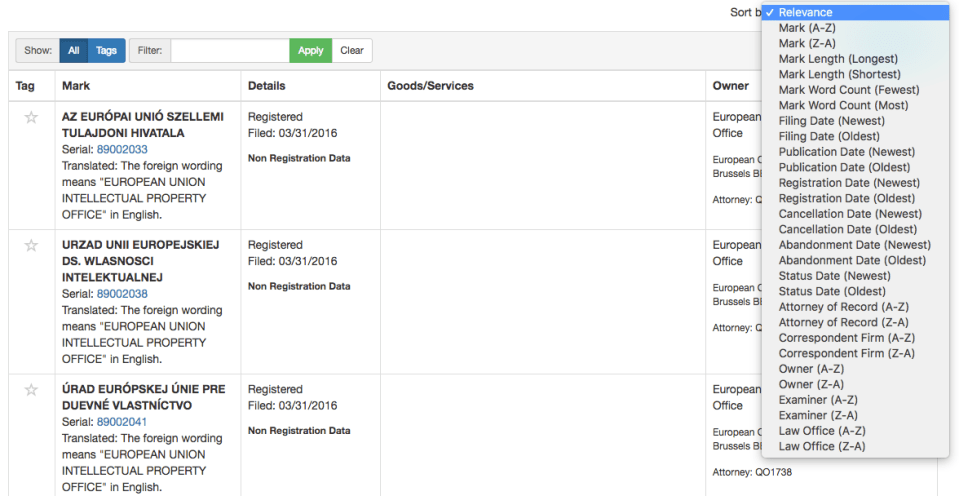
The first “front-end” upgrade available as a result of these back-end changes is the ability to sort the results of all new manual searches, including via relevance, mark, mark length, mark word count, filing, publication, registration, abandonment, and status dates, attorney, correspondent firm, owner, Examiner, and law office. Find this under “Sort by” in the upper-right corner of your manual search results table. This should be a nice quality-of-life enhancement for your day-to-day searching and diligence projects!

sort

We’re looking forward to all the new enhancements and tools that we can now develop more easily with these back-end upgrades.

Weak Marks and Disclaimed Terms – The Lesser Side of Trademark Life

Trademark law views marks on a continuum of strength – the strongest marks are coined or arbitrary marks, followed by suggestive marks, with descriptive marks and then unprotectable generic terms bringing up the rear. While a strong, enforceable mark is ideal, brand owners often desire marks towards the suggestive or descriptive side of the spectrum to make it resonate more with consumers.

We at TM TKO were curious whether certain types of industries found more value in weaker marks than others. Accordingly, we did some research as to how common disclaimers and Supplemental Register registrations were among active applications and registrations in various classes.

Full data is at the bottom of this blog post.

Goods vs. Services

Both disclaimers and Supplemental Register registrations were more common for services than goods, with 21% disclaimers in goods vs. 35% in services and 3% disclaimers for goods vs. 4% disclaimers for services.

Disclaimer Trends

Among goods, disclaimer volume was fairly evenly distributed. Classes 3, 16, 19 had rates over 20%; the 29, 30, 31, and 32 all had very high rates of over 30%. Perhaps foods and drinks find more value than most industries in including the generic term for the product in addition to the distinctive part of the brand; the higher levels of disclaimers is a clear trend.

Among services, disclaimers were considerably more common. Classes 35, 36, 37, 41, and 44 all exceeded 30%, and Class 43 (restaurants and hotels) had a whopping 44% disclaimer rate – apparently, the pressing biological needs for food and drink and rest make identifying the nature of the establishment more central than these than for other services. It certainly correlates with the trends for food and drink goods.

Supplemental Register Trends

The largest Supplemental Register percentages were in Classes 16 (books and other printed matter), 35 (retail and a bunch more), 36 (insurance and financial services) 44 (medical services), 45 (legal, security, and social services), and Class B (services certification marks). Class 16 also appeared under the most common disclaimers, perhaps reflecting a trend in magazine titles or educational material titles that are more likely to find value in descriptive terms or marks?

Supplemental Register registrations were quite rare in Class 1 (chemicals), 18 (leather goods), 23 (yarn), and 24 (textiles). It’s not clear to us why admittedly descriptive marks would be more common for these sorts of products, but between leather, yarn, and textiles, they are related goods, so appears to be a trend for these related industries. Disclaimers were pretty low in each of those classes, too, so it appears to be a real trend.

Doing These Searches in TM TKO

Go to “Search,” the manual search section, then use the “Register” option (to narrow to Supplemental) or the “Disclaimer Present” option (to find those that have a disclaimer of some sort), plus class and “Lifecycle Status” set to “active.”

Data

The full data follows. Keep in mind that the numbers reflect the number of active filings that contain a class.

Class Disclaimers Disc. % Supplemental Supp. % Total
1 9,680 14% 967 1% 66,952
2 3,436 17% 357 2% 20,070
3 31,130 25% 2,629 2% 125,425
4 4,225 21% 344 2% 20,487
5 27,146 20% 3,032 2% 137,096
6 9,991 19% 1,133 2% 52,652
7 14,607 17% 1,749 2% 87,053
8 6,076 19% 692 2% 32,836
9 76,444 17% 10,890 2% 458,915
10 12,195 15% 1,776 2% 79,881
11 14,330 17% 1,891 2% 85,820
12 10,875 17% 1,114 2% 62,560
13 2,527 19% 319 2% 13,313
14 9,996 17% 1,203 2% 58,456
15 1,476 14% 287 3% 10,657
16 42,451 26% 5,946 4% 162,680
17 4,155 14% 499 2% 29,456
18 9,930 15% 765 1% 65,283
19 8,002 22% 858 2% 36,811
20 14,597 21% 1,580 2% 70,427
21 16,513 20% 1,889 2% 81,957
22 2,260 17% 250 2% 13,160
23 555 11% 40 1% 4,961
24 7,473 19% 578 1% 38,773
25 47,560 17% 6,565 2% 274,732
26 3,407 18% 389 2% 18,494
27 2,355 17% 217 2% 14,068
28 23,434 21% 2,224 2% 114,245
29 23,184 34% 1,902 3% 68,707
30 39,942 36% 3,030 3% 111,549
31 11,409 30% 995 3% 38,162
32 18,775 33% 1,297 2% 57,606
33 16,544 25% 1,386 2% 66,419
34 4,337 19% 506 2% 22,429
35 126,257 33% 14,360 4% 387,959
36 63,741 38% 6,010 4% 166,369
37 29,557 35% 2,224 3% 83,478
38 11,982 22% 1,390 3% 55,426
39 19,598 36% 1,592 3% 55,071
40 13,687 31% 1,069 2% 43,939
41 125,618 34% 14,893 4% 367,443
42 68,428 25% 8,640 3% 277,737
43 39,419 44% 2,317 3% 90,458
44 35,277 37% 3,928 4% 94,184
45 19,117 29% 2,509 4% 65,499
A 986 25% 30 1% 3,928
B 1,563 29% 245 5% 5,392
200 1,458 26% 83 1% 5,599
Goods 439,660 21% 53,831 3% 2,052,927
Services 446,962 35% 50,537 4% 1,295,357

Trademark Trends – State Names

Geographic names play an important part in branding, from creating a strong local or regional flair to a mark. As a result, there are several provisions of the Lanham Act that restrict registration to certain types of geographic marks. This post will not dive into the legal details, though – it’s looking at a broader question of popularity. Geographic names often reflect broad cultural significance, like a country name, or very local importance, like city or county or even neighborhood names. This post looks at the popularity of brands that include state names as a part of the mark or pseudo mark.

There is roughly one active trademark application or registration per every 100 US residents, so we’ll use US population vs. state population to find the “expected” ratio of trademark filings related to that state versus the actual numbers. So, we can find which states are most over-represented from a branding perspective, and what other not rigorously-statistically-supported insights we can pull from this data without this blog post taking way too long to complete.

New York did really well, but almost certainly because the city name is boosting the “state” numbers by a ton. Texas is a bit over-represented; no surprise, given the extent of “patriotism” – there is a hole in English, or at least in my personal lexicon, for a state-level equivalent of “patriotism.”

States with multiple larger cities tended to perform worse than comparably sized states with only one major city; it’s likely that city-level affiliations carry more weight in, say, Ohio than in Georgia.

Some tiny states, Hawaii, Alaska, Maine, and Vermont, were really over-represented. At least from a trademark filing perspective, people love those states! In general, smaller states tended to over-perform their expected filings; perhaps the absence of an “alternative affiliation” like a metro center or centers pushes more geographic branding towards a state name.

State Population Live Apps + Regs Expected Actual Difference
California 39,776,830 2,593 0.121 0.102 -0.020
Texas 28,704,330 2,399 0.088 0.094 0.007
Florida 21,312,211 1,346 0.065 0.053 -0.012
New York 19,862,512 3,495 0.061 0.137 0.077
Pennsylvania 12,823,989 318 0.039 0.012 -0.027
Illinois 12,768,320 327 0.039 0.013 -0.026
Ohio 11,694,664 403 0.036 0.016 -0.020
Georgia 10,545,138 612 0.032 0.024 -0.008
North Carolina 10,390,149 245 0.032 0.010 -0.022
Michigan 9,991,177 555 0.030 0.022 -0.009
New Jersey 9,032,872 285 0.028 0.011 -0.016
Virginia 8,525,660 759 0.026 0.030 0.004
Washington 7,530,552 600 0.023 0.024 0.001
Arizona 7,123,898 511 0.022 0.020 -0.002
Massachusetts 6,895,917 451 0.021 0.018 -0.003
Tennessee 6,782,564 398 0.021 0.016 -0.005
Indiana 6,699,629 352 0.020 0.014 -0.007
Missouri 6,135,888 220 0.019 0.009 -0.010
Maryland 6,079,602 195 0.019 0.008 -0.011
Wisconsin 5,818,049 362 0.018 0.014 -0.004
Colorado 5,684,203 724 0.017 0.028 0.011
Minnesota 5,628,162 393 0.017 0.015 -0.002
South Carolina 5,088,916 164 0.016 0.006 -0.009
Alabama 4,888,949 235 0.015 0.009 -0.006
Louisiana 4,682,509 284 0.014 0.011 -0.003
Kentucky 4,472,265 420 0.014 0.016 0.003
Oregon 4,199,563 431 0.013 0.017 0.004
Oklahoma 3,940,521 240 0.012 0.009 -0.003
Connecticut 3,588,683 201 0.011 0.008 -0.003
Iowa 3,160,553 316 0.010 0.012 0.003
Utah 3,159,345 249 0.010 0.010 0.000
Nevada 3,056,824 237 0.009 0.009 0.000
Arkansas 3,020,327 106 0.009 0.004 -0.005
Mississippi 2,982,785 162 0.009 0.006 -0.003
Kansas 2,918,515 267 0.009 0.010 0.002
New Mexico 2,090,708 156 0.006 0.006 0.000
Nebraska 1,932,549 124 0.006 0.005 -0.001
West Virginia 1,803,077 59 0.005 0.002 -0.003
Idaho 1,753,860 195 0.005 0.008 0.002
Hawaii 1,426,393 950 0.004 0.037 0.033
New Hampshire 1,350,575 61 0.004 0.002 -0.002
Maine 1,341,582 594 0.004 0.023 0.019
Montana 1,062,330 299 0.003 0.012 0.008
Rhode Island 1,061,712 63 0.003 0.002 -0.001
Delaware 971,180 179 0.003 0.007 0.004
South Dakota 877,790 160 0.003 0.006 0.004
North Dakota 755,238 100 0.002 0.004 0.002
Alaska 738,068 944 0.002 0.037 0.035
District of Columbia 703,608 154 0.002 0.006 0.004
Vermont 623,960 431 0.002 0.017 0.015
Wyoming 573,720 159 0.002 0.006 0.004
  328,032,421 25,483      


Trademark Application Pendency – Jan. 2018

The USPTO’s trademark dashboard has a high-level summary of the status of its overall performance on examinations. The Office aims for an average of under 12 months from filing to abandonment/allowance/registration, and less than 3.5 months from filing to the first examination action. The latter has crept up from a low of about 2.5 months until average first examination in Q3 2017 to 3.5 months until average first examination in Q4 2018 and Q1 2019. The “inventory” of applications awaiting examination also has risen over that same time frame, although is starting to drop again in January 2019.

These figures just look at the averages, though – this blog post will focus on outliers: those applications that are really slow to get their first review from the Office.

Filing Date “New” status “Examined” status Total
2017 22  
Jan.-Jun. 2018 2,429  
July 2018 775 35,566 38,341
Aug. 2018 550 38,600 39,150
Sept. 2018 683 34,386 35,069
Oct. 2018 18,414 18,414 36,828
Nov. 2018 30,028 2,907 32,935
Dec. 2018 29,836 982 30,818
Jan. 2019 (partial) 25,204 20 (largely express abandonments) 27,224

The 2017 filings were especially interesting – it looks like a lot of these were rather intentionally avoided because they could be hairy to prosecute. One is a color scheme related to hospital sanitary tracking, several raise 2(a) issues both of the garden variety (WITCH AS FUCK and MANIFEST THAT SHIT and #ALLGRATEFULANDSHIT and a couple more) and the truly unpleasant (a swastika). Some had no obvious reason for basically getting ignored, like DIOR GENESE (which seems to have been picked up recently, and just got its XSearch review) and DICSSIN (which also got its search summary). This seems to be a concerted effort from the USPTO – it matches scuttlebutt on the Oppendahl E-Trademarks listserv that some senior lawyers from the Petitions and Assistant Commissioners’ office have been loaned out internally to help deal with deep backlog.

Among the first-half-of-2018 stragglers, there is a similar mix – lots that are slow to get examined for no immediately obvious reason, and some where it feel like there is more intent from the Office. CBD and hemp applications, which accounted for nearly 1/5th of the not-yet-examined applications from early 2018. The Office is also examining plenty of CBD/hemp applications, although slightly fewer applications than have not been examined – definitely weird for 6+ month old applications. This does not feel like it is an informal Office policy; it’s at least as likely that, given some discretion, Examiners are leaning towards dealing with applications that are likely to yield simpler examinations and quicker pendency times. There does not appear to be any other easy to identify pattern in “delayed examinations” based on mark or goods, nor any pattern about counsel of record.

Overcoming 2(e)(2) Refusals Involving a County Name

Your client has filed an application for a trademark that includes the name of a county where it has offices – think LEE LAGER for a beer brewed in Lee County, Alabama. It has received a 2(e)(2) refusal from the Office, with the Examining Attorney alleging that the mark is “primarily geographically descriptive” of the goods.

You want to find examples of applicants overcoming this 2(e)(2) refusal where the term is a county. TM TKO can help – let’s find out how.

First, the legal test: to establish that a mark is primarily geographically descriptive under the Lanham Act § 2(e)(2), 15 U.S.C. § 1052(e)(2), one must show that: (1) the primary significance of the mark is a generally known geographic place or location; (2) the goods or services for which the applicant seeks registration originate in the geographic place identified in the mark; and (3) purchasers would be likely to believe that the goods or services originate in the geographic place identified in the mark (i.e., a services/place association). See TMEP § 1210.01(a).

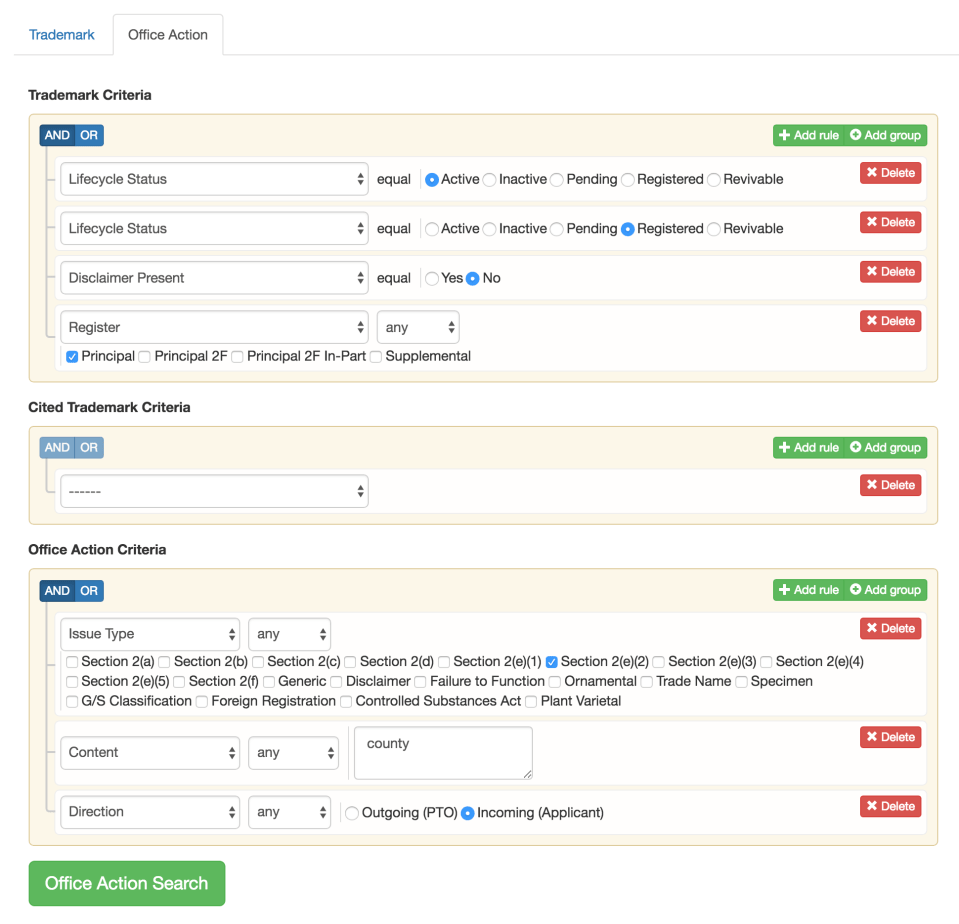
We want to start with the narrowest set of results that we know are right on point – active registrations that have no disclaimers and are on the Principal Register (all added under “Trademark Criteria”) that faced a 2(e)(2) refusal in prosecution and relate to a “county,” which we specify in the free-text “Content” section. We also specify Incoming responses from applicants to focus just on successful responses. This is just a subset of all relevant responses – there will be many on the Principal Register with a disclaimer of a different term that will also be highly relevant – but this is a great start, and avoids and that were registered only with the term in question disclaimed. Indeed, LEE LAGER would likely disclaim “lager,” indicating how narrow this result set might be.

In TM TKO, this search query looks like:

county_name

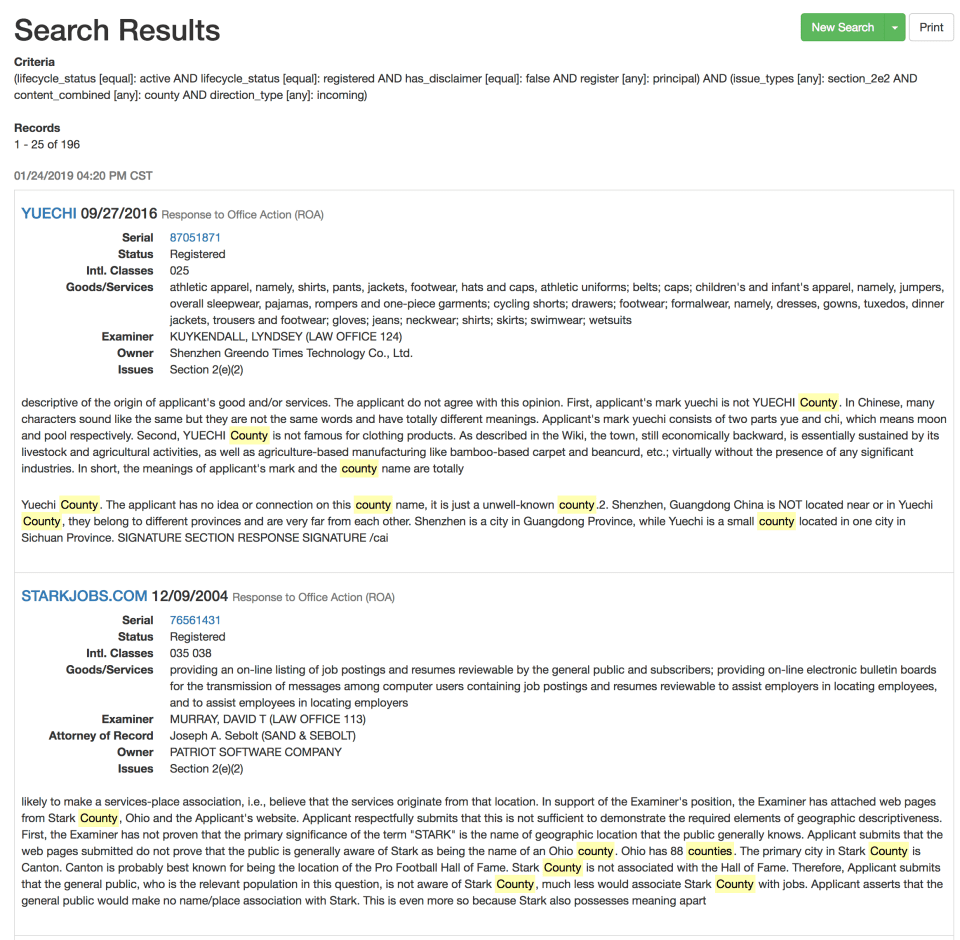
The search identifies more than 196 documents meeting this very limited fact pattern.

county_results

The preview text lets you quickly triage for the closest factual matches. YUECHI, the first result, focuses on a small foreign county, in China; it’s less likely to be a direct comparable than an American county. A couple of results further down, we have an Office Action Response for the mark ESSEX for electronic mounting racks. This is exactly what we are looking for – a mark related to a US county. The applicant successfully argued that the term has the geographic meaning that the Examiner suggested – a county in New Jersey – but that (a) the county is in no way renowned for the goods, and that (b) it is non-specific, identifying multiple potential locations. The evidence provided in connection with the response provides an excellent guide to pulling together convincing evidence to support our response.

Just further down, a response for an application for NESHOBA for crape myrtles successfully overcomes its 2(e)(2) refusal. While “Neshoba” is a small county in Mississippi, a state in which the applicant, Mississippi State University, is also located, the applicant successfully argued that the county name is not widely known to plant purchasers (or consumers in general), that consumers would not recognize it as a place at all, much less make any sort of association of a goods/place relationship.

If we drop the “disclaimer” limiter, one of our first results is a registration for LACKAWANNA BREWING – a county in Pennsylvania, and directly analogous to our fact pattern. It disclaims “brewing,” which is fine and comparable to disclaiming LAGER in our example. The applicant successfully argued that its beer was actually produced at the Lackawanna Terminal in Hoboken, NJ, rather than in Lackawanna County – a secondary meaning, and not the primary meaning the public would expect under part (1) of the Section 2(e)(2) test. Given the number of Lee Counties nationwide – twelve, from some quick research – this might be a good argument for our hypothetical mark, too. Scrolling a bit further down our list, we see similar successful arguments overcoming a refusal for HUDSON PALE ALE. That response also added arguments that HUDSON could be perceived as a surname or a geographic identifier, weakening the “primary” significance of either; that same argument could apply to “Lee,” too.

In just a few minutes, we’ve found successful arguments and sample evidence to help guide our response, plus examples of other refusals that were withdrawn by Examiners on highly similar evidence that we can point to as support – even several within the same industry, without even trying to narrow by class or goods. If you need to argue against a 2(e)(2) refusal or a comparable substantive issue, some quick Office Action research in TM TKO can help get you off to a quick start and a successful conclusion.

Trademark Protection and Concert Halls

While you can see a great concert anywhere, seeing a great show in a great venue that’s seen countless great performances over its years adds to the experience. This blog post looks at what the top 20 venues, per a 2016 list compiled by Consequence Of Sound, have been doing to protect the brands associated with the iconic venues.

Fourteen of the twenty have at least one trademark registration. The most popular class, by far, was Class 41, covering some sort of live music services – the venue itself. The next most popular were food/drink-related classes, like bar services (Class 43 or, in older registrations, 42) and then merchandising, especially clothing in Class 25.

Venue Registrations Classes Owner Counsel
The Fillmore 6 6, 16, 25, 35, 41 Live Nation Worldwide, Inc. Ellie Schwimmer
The Bowery Ballroom 2 35, 41 Cocktail Blue, LLC Lawrence Apolzon
Metro Chicago 2 41 Stages-Music Hall, Inc.

DBA Cabaret Metro

Kimberly Brown Mosberg
Hollywood Bowl
9:30 Club 2 25, 41, 43 Sledge, Inc. Camille Miller
Stubb’s 14 4, 29, 30, 41, 43 One World Foods, Inc.  
Red Rocks Amphitheater 3 41, 42 City and County of Denver Leigh Augustine
Great Scott
The Gorge
Ryman Auditorium 7 14, 16, 20, 25, 28, 36, 37, 41 Grand Ole Opry IP, LLC Edward Playfair
First Avenue and 8th St. Entry 5 (2 pending) 25, 41, 42 (9, 10, 14, 16, 21, 28, 35, 41, 43) F-Troop LLC James Young
Cat’s Cradle
Pappy and Harriet’s Pioneertown Palace 5 (2 pending) 25, 41, 43 (30) No Regrets Coyote Inc. Gabrielle Holley
Tabernacle
Toad’s Place 2 42 World of Toads Development Corporation Jason Drangel
Electric Factory 1 41 Live Nation Worldwide, Inc. Ellie Schwimmer
Doug Fir Lounge 1 43 Burnside Entertainment Group LLC David Peterson
40 Watt Club
Doug Weston’s Troubadour 1 41 Troubadour Enterprises, Inc. Burton Jacobson
The Hideout 1 41 Hideout Inn, Inc. Grant Peters

Athletes and Trademark Protection

Michael Jordan’s basketball greatness translated to commercial appeal and the the strong, durable AIR JORDAN brand. What about other, contemporary athletes?

This blog post looks at the brand protection sought and obtained by major athletes in the US, and describes some common practices and trends. For convenience, we’ll look at the 10 highest paid players in the four major sports leagues in the US, plus high-profile figures from other sports, and limit the inquiry to the US trademark registry. Only active athletes were used. We searched for the athlete’s name as a mark (both names together or first or last if they were distinctive) plus, if we found one and it was held by a corporate entity, we searching for that corporate entity as well. We have included both salary and endorsement data, to see if one was more highly correlated to trademark filings than the other.

Trademark filing volume was quite a bit higher for stars with substantial endorsements – it had a correlation of about 0.47 with the number of trademark filings; the salary correlation of 0.02 was comparatively minimal. It certainly appears that, outside of shoes and sports equipment, most of the value of an athlete’s “brand” is in their recognizable endorsement rather than in selling branded products. Nevertheless, filing frequency rose with endorsement income, as an understandable effort to protect that consumer recognition above and beyond the protections provided by right of publicity law.

The most striking examples of the correlation between endorsement value and trademark filings were in the NFL – defensive stars Khalil Mack and Aaron Darnold made a pittance in endorsements compared to offensive stars – quarterbacks like Aaron Rodgers, Matt Ryan, Drew Brees, and Tom Brady, but also wideout Odell Beckham Jr. Even Alex Smith made significantly more than either defensive star, and Jimmy Garoppolo made more than Darnold. Only Brady had significant numbers of trademark filings; Rodgers, Garoppolo, and Cousins all had a couple, and Brees’ name was used in a filing by AdvoCare with his permission.

Endorsements in the NBA were far more significant than in any other major US league, and more widely distributed, with seven stars making over $10,000,000 in endorsements and others close behind. International stars in soccer, tennis, and golf did similarly well. Six of the top ten NBA players in earnings had at least one active trademark application or registration in the US, too. Only three soccer stars passed the $10 million mark, while five tennis stars (the Big Four plus Kei Nishikori and Serena Williams) did. So did four golfers, all men.

Endorsements and trademark filings were lowest in the NHL and MLB. The top hockey players, Sidney Crosby, Alex Ovechkin, and Connor McDavid, all made under $5 million in endorsements. None had US trademark filings, although perhaps their Canadian endorsements are worth more. Baseball players had a few more filings, but even less lucrative endorsements, perhaps because the sport tends to generate mainly regional allegiances instead of national interest in the sport as such.

The content of the trademark filings were a mix of merchandised goods and charitable services. Perhaps the most interesting was an amateur sports app created by Justin Verlander. Individuals filed a bit under half of the applications (although some applicants later filed under a business entity too), and a couple granted permissions to file to third parties – Brees, mentioned above, and Albert Pujols, who had partnered with a local hospital. Charitable foundations filed about a tenth of the applications.


League Player Salary Endorsements US TMs Owner League correlation -0.108384656
NFL Aaron Rodgers $66,900,000 $9,000,000 2 ACR Ventures LLC Salary correlation 0.014802715
NFL Matt Ryan $52,500,000 $5,000,000 0 Endorsements correlation 0.475685934
NFL Jimmy Garoppolo $42,600,000 $500,000 2 Yee & Durbin Sports LLC
NFL Khalil Mack $41,000,000 $750,000 0 League covariance -1.472222222
NFL Aaron Darnold $40,900,000 $250,000 0 Salary covariance 1797753.333
NFL Alex Smith $40,000,000 $1,000,000 0 Endorsements covariance 50763155.56
NFL Drew Brees $27,000,000 $13,000,000 1 AdvoCare International, L.P.
NFL Tom Brady $15,000,000 $14,000,000 33 TEB Capital Management, Inc.
NFL Odell Beckham Jr. $21,500,000 $6,500,000 0 Odell Beckham Sr. filed for OBJ in 2016, but it is abandoned
NFL Kirk Cousins $26,000,000 $1,500,000 2 Kirk Cousins
NBA LeBron James $33,300,000 $52,000,000 38 LeBron James
NBA Stephen Curry $34,700,000 $42,000,000 4 Wardell Stephen Curry
NBA Kevin Durant $25,000,000 $33,000,000 5 Kevin Durant Charity Foundation
NBA James Harden $28,300,000 $20,000,000 0
NBA Russell Westbrook $28,500,000 $19,000,000 13 Russell Westbrook Enterprises, Inc.
NBA Damian Lillard $26,200,000 $14,000,000 1 Damian Lillard
NBA Blake Griffin $29,500,000 $6,000,000 0
NBA Giannis Antetokounmpo $22,500,000 $13,000,000 4 Giannis Antetokounmpo
NBA Carmelo Anthony $26,200,000 $7,000,000 0 The Carmelo Anthony Foundation, Inc. (2 abandoned)
NBA Anthony Davis $23,800,000 $9,000,000 0 Anthony Marshon Davis, Jr. (1 abandoned)
NHL Connor McDavid $15,000,000 $4,000,000 0
NHL John Tavares $15,900,000 $1,400,000 0
NHL Carey Price $15,000,000 $600,000 0
NHL Alexander Ovechkin $10,000,000 $4,500,000 0 Alexander Ovechkin (2 abandoned)
NHL Sidney Crosby $10,000,000 $4,000,000 0
NHL Jonathan Toews $12,000,000 $1,700,000 0 Jonathan Toews Enterprises, Inc. (1 abandoned)
NHL Jamie Benn $13,000,000 $100,000 0
NHL Patrick Kane $12,000,000 $350,000 0
NHL Anze Kopitar $12,000,000 $60,000 0
NHL John Carlson $12,000,000 $50,000 0
MLB Mike Trout $32,300,000 $2,500,000 0
MLB Clayton Kershaw $33,800,000 $800,000 2 Kershaw Management, LLC
MLB David Price $30,700,000 $650,000 0
MLB Miguel Cabrera $30,500,000 $500,000 3 Jose Miguel Cabrera (3 abandoned)
MLB Yoenis Cespedes $29,500,000 $500,000 0
MLB Justin Verlander $29,000,000 $1,000,000 1 Justin Verlander (amateur sports app)
MLB Giancarlo Stanton $28,200,000 $3,200,000 0 Giancarlo Stanton (1 abandoned)
MLB Albert Pujols $27,000,000 $1,000,000 0 Two apps for a health center filed by a hospital
MLB Felix Hernandez $27,300,000 $400,000
MLB Joey Votto $25,300,000 $250,000 0 Joey Votto Foundation (1 abandoned)
Tennis Roger Federer $12,200,000 $65,000,000 0 2 abandoned
Tennis Rafael Nadal $14,400,000 $27,000,000 4 Aspemir SL
Tennis Kei Nishikori $1,600,000 $34,600,000 0
Tennis Novak Djokovic $1,500,000 $22,000,000 5 Novak Djokovic
Tennis Serena Williams $62,000 $18,000,000 4 Serena Williams (several abandoned) / Aneres, LLC
Tennis Caroline Wozniacki $7,000,000 $6,000,000 0
Tennis Grigor Dmitrov $6,700,000 $6,000,000 0
Tennis Andy Murray $1,000,000 $10,500,000 2 77 Management Limited
Tennis Sloane Stephens $5,700,000 $5,500,000 0
Tennis Garvine Muguruza $5,500,000 $5,500,000
Golf Tiger Woods $1,300,000 $42,000,000 16 ETW Corp.
Golf Phil Mickelson $4,300,000 $37,000,000 6 Mickelson, Inc.
Golf Jordan Spieth $11,200,000 $30,000,000 0
Golf Rory McIlllroy $3,700,000 $34,000,000 0
Golf Justin Thomas $21,000,000 $5,000,000 0
Soccer Lionel Messi $84,000,000 $27,000,000 0
Soccer Christiano Ronaldo $61,000,000 $47,000,000 16 Christiano Ronaldo
Soccer Neymar $73,000,000 $17,000,000 0 Neymar Sport e Marketing s/s Ltda (1 abandoned)
Soccer Gareth Bale $28,600,000 $6,000,000 0
Soccer Paul Pogba $25,000,000 $4,500,000 0
Soccer Oscar $25,900,000 $1,500,000 0
Soccer Wayne Rooney $22,000,000 $5,000,000 0
Soccer Luis Suarez $19,900,000 $7,000,000
NFL https://www.forbes.com/sites/kurtbadenhausen/2018/09/20/the-nfls-highest-paid-players-2018-aaron-rodgers-leads-with-76-million/
NBA https://www.statista.com/statistics/202939/nba-players-with-the-highest-salaries/
NHL https://www.forbes.com/sites/kurtbadenhausen/2018/12/05/the-nhls-highest-paid-players-2018-19-connor-mcdavid-on-top-at-19-million/#4f8917565871
MLB https://www.forbes.com/sites/kurtbadenhausen/2018/04/11/major-league-baseballs-highest-paid-players-for-2018/
Tennis https://www.forbes.com/sites/kurtbadenhausen/2018/08/27/highest-paid-tennis-players-2018-roger-federer-aces-competition-with-77-million/#164ecb621fb3
Golf https://www.cnbc.com/2018/08/09/the-5-highest-paid-golfers-in-the-world.html
Soccer https://www.cnbc.com/2018/06/13/the-8-highest-paid-soccer-players-in-the-world.html

Watching Updates

TM TKO has made several improvements that should make reviewing watches far quicker and more efficient.

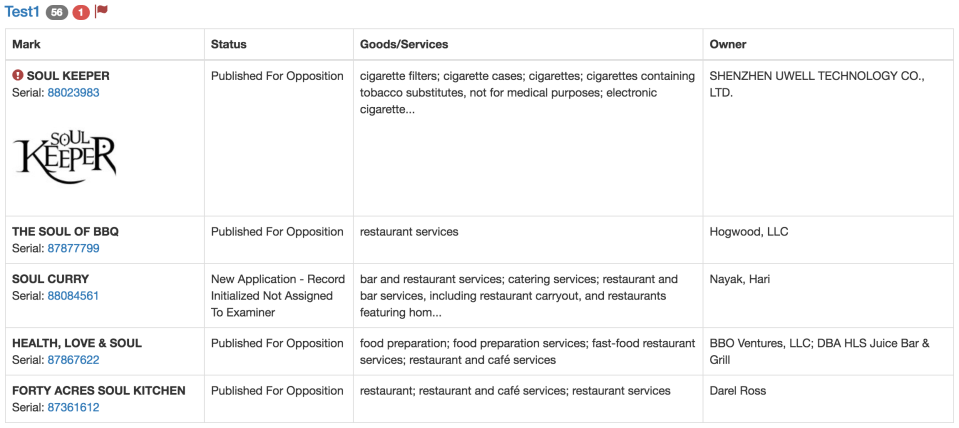
Flagging priority items. The watch overview page and individual watch reports now flag higher-priority items to call them to your attention, as in the watch overview page example for SOUL KEEPER for restaurant services that is shown below.

soul_keeper

More aggressive screening of lower-quality results. We are removing more lower-quality results from your result sets, providing fewer total results without compromising reporting of potentially concerning applications.

Daily digest emails. Email reports are now provided in a convenient daily digest rather than individual emails. These digest emails highlight potentially concerning results.

From this “digest” email, you can either click “View all watch activity” to go to your main watch overview page, or click into specific reports.

digest_email

We hope you enjoy the changes! If you have any comments or suggestions, we’d love to hear from you – please email us at support@tmtko.com.

Two New ThorCheck Tools from TM TKO

TM TKO is excited to announce two powerful additions to its core ThorCheck™ trademark research tool. The two central factors of the likelihood of confusion analysis are the similarity of the marks and the relationship between the goods and services. ThorCheck “classic” generates registry-based evidence for the goods and services relationship.

The two new additions to ThorCheck bring its powerful comparison engine to bear on questions of mark similarity.  If you represent a junior party, you can use these tools to identify evidence of mark co-existence that can help convince Examiners, counter-parties, or a court that your client’s mark should be able to co-exist with a prior mark. If you represent a senior party, you can find evidence over overlap – that the same company owns multiple marks that contain a single term (Term Coexistence) or that the same company owns marks that differ only (or mainly) by the term you search for (Term Difference). This powerful evidence takes hours to track down manually, but ThorCheck makes the research instantaneous – you can do your best work, and work much more efficiently.

Term Coexistence

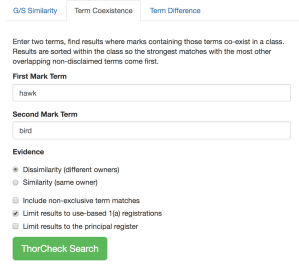
Use this tool to find examples of co-existing registrations in the same class that contain both of the relevant terms. For example, if your client’s mark was NIGHT HAWK and the other party’s mark was BRIGHT BIRD, the following search identifies instances where active, use-based registrations containing HAWK coexist on the registry with registrations containing BIRD in the same class.

thor_term_coexist

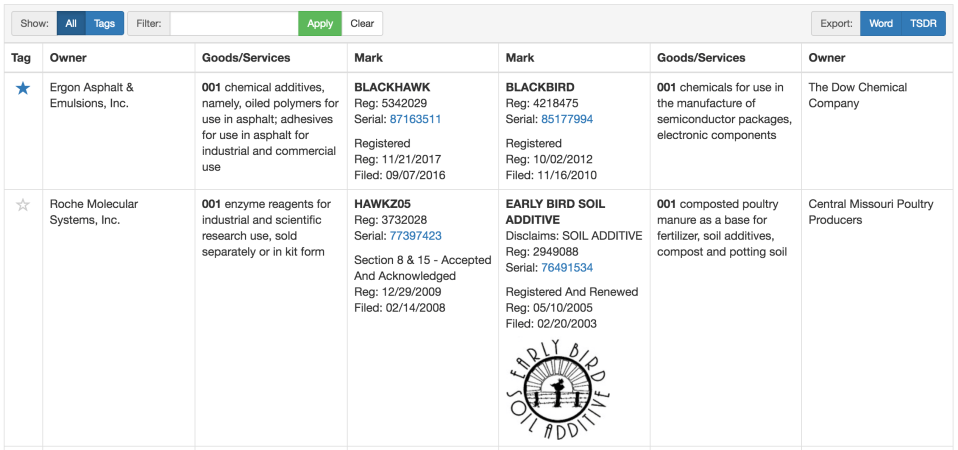
Results pairs are organized by class. Within a class, these with marks that share another common term prioritized, like the BLACKHAWK vs BLACKBIRD registrations shown below. This search identifies dozens of high-quality matches similar to BLACKHAWK vs BLACKBIRD, plus many, many more “looser” matches.

thor_term_coexist_result

As with all ThorCheck reports, you can export tagged records via Word to incorporate the summary chart into a draft Office Action Response or other document, or export TSDR status and title copies to make this quality evidence official “of record” in your prosecution history file or TTAB proceeding.

Term Difference

Use the “Term Difference” tool to identify instances where two owners have marks in a single class that differ by a term. The second new tool requires only one input: the term by which they differ. So, if your mark differs from a prior mark largely due to the term PURPLE, you can enter that term and find other instances of co-existing registrations that differ only by this term. Since this tool is prioritizing results that share a common term (whatever that term is), it’s almost impossible to duplicate manually without hours and hours of effort.

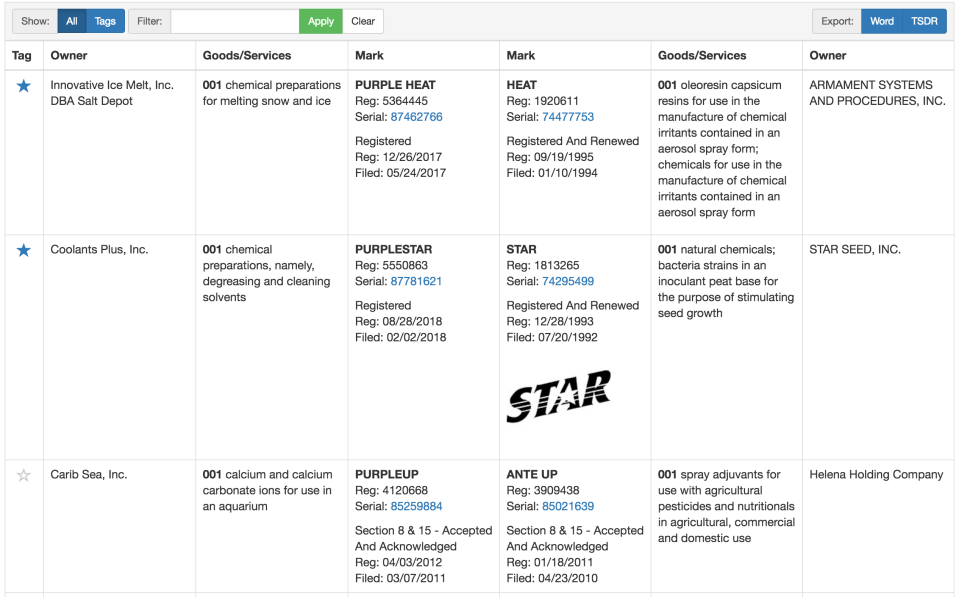
The excerpt below shows sample results for the PURPLE search. Results that differ ONLY by the word “purple,” like PURPLE HEAT vs HEAT and PURPLESTAR vs STAR & Design in the example below, are prioritized. The full report identifes dozens of matches.

thor_difference_result

We can’t wait to see how you use these new ThorCheck options!


Using Office Action Search for TTAB-Related Research

With TM TKO’s Office Action research tools, you can easily see how the Examining corps and applicant-side trademark attorneys are using Trademark Trial and Appeal Board decisions.

We will look at a selection of recent precedential decisions from the TTAB and outcomes where Examiners or applicants citing to these decisions. I focused on USPQ citations, which may under-count the decisions slightly, and may miss citations issued right after the cases came out and before a USPQ number is assigned, but it suffices for a quick read of relative citation frequency.

Case Decision First Citation Pub. Rate
In re Minerva Associates, Inc., 125 USPQ2d 1634 (TTAB 2018) Allowed screenshots of software login & search screens as specimens – 1 cite by USPTO
– 4/1/2018 second Office Action

– 13 cites from applicants
– first cite: 2/28/2018 Office Action Response

Pub: 3
Reg: 8
Pending pre-pub: 2
Abandoned: 0

Specimen issues are common but are frequently resolved in prosecution. Even by those standards, applicants citing Minerva have been quite successful.

Specimen issues are common but are frequently resolved in prosecution. Even by those standards, applicants citing Minerva have been quite successful.

Case Decision First Citation Pub. Rate
Grote Industries v. Truck-Lite Co., LLC f/k/a/ Truck-Lite Co., Inc., 126 USPQ2d 1197 (TTAB 2018) Truck light design not functional under 2(e)(5) but had not acquired distinctiveness under 2(f) – 1 cite by USPTO
– 6/14/2018 Office Action, replacing an earlier final Office Action from December with a non-final Office Action account for the Grote decision

– not cited by any applicants yet

Pub: 0
Reg: 0
Pending pre-pub: 1
Abandoned: 0

Functionality refusals are quite rare – a couple of hundred Office Actions in 2018 to date. It’s little surprise that this March 2018 decision has gotten little traction from either the USPTO’s examining corps or applicants’ counsel so far.

Case Decision First Citation Pub. Rate
In re Shabby Chic Brands LLC, 122 USPQ2d 1139 (TTAB 2017) Design was a “simulation” of Prince of Wales’ official insignia under 2(a) – 3 cites by USPTO
– 4/12/2018 first Office Action for this principle of law (the same application on remand)


– 3 cites by applicants
– 12/22/2017 first Office Action Response

Pub: 2
Reg: 0
Pending pre-pub: 3
Abandoned: 1

Insignia refusals under Section 2(b) of the Lanham Act are one of the very least common types of refusals, with under 120 in 2018. Most of these relate to US or Swiss flags, so the Welsh insignia here is especially uncommon. An uncommon fact pattern in an overall uncommon refusal has generated only a handful of citations to the case, although respondents referencing it have been relatively successful.

Case Decision First Citation Pub. Rate
Primrose Retirement Communities, LLC v. Edward Rose Senior Living, LLC, 122 USPQ2d 1030 (TTAB 2016) On evidence that registered PRIMROSE co-existed with multiple direct competitors using the same mark, overturns 2(d) citation for ROSE SENIOR LIVING – 2,261 cites from USPTO
– 199 cites by applicants
– 4/26/2017 first Office Action Response
Pub: 241
Reg: 93
Pending pre-pub: 1689
Abandoned: 571

What on earth is going on with the Primrose case, which was first cited almost four months after its issuance and hardly cited to at all for almost a year and a half, and, more recently, is cited constantly? In an October 2017 update, the Trademark Manual of Examination Procedure added references to Primrose to its sections about sophisticated purchasers (1207.01(d)(vii)) and third-party registration and use evidence (1207.01(d)(iii)). The case is often used to support the sophisticated purchaser principal by Examining Attorneys, and applicants’ counsel are especially likely to cite to the latter principal about third-party evidence. The uptick in citations to Primrose occurred recently enough that most of the Office Actions and Responses referring to Primrose haven’t reached a final decision.

How Can You Do This Sort of Research?

If you want to see how other lawyers are effectively referencing key TTAB decisions that you want to use in your own writing, you can sign up for a thirty-day free trial of TM TKO. You’ll get unlimited use of our tools, too: instant, smart search, unlimited watch and 2(d) citation watching, ThorCheck, and other unique research tools.

Researching Surname Refusals

Today, we’ll take a look at “primarily merely a surname” refusals. Section 1052(e)(4) of the Lanham Act limits registration where the mark is “primarily merely a surname.” TMEP § 1211.01. To make a determination about whether consumers will perceive the mark as primarily merely a surname, the Office will consider:

  • (1) whether the surname is rare;
  • (2) whether the term is the surname of anyone connected with the applicant;
  • (3) whether the term has any recognized meaning other than as a surname;
  • (4) whether it has the “structure and pronunciation” of a surname; and
  • (5) whether the stylization of lettering is distinctive enough to create a separate commercial impression.

In re Benthin Mgmt. GmbH, 37 USPQ2d 1332, 1333-1334 (TTAB 1995). The first and third tend to be the most frequent points of dispute.

Since 2010, the Office has preliminarily refused over 53,000 marks on 2(e)(4) grounds. Just shy of 40% of applications that received this refusal were abandoned prior to publication. The rest resolved the issue in one way or another, resulting in either registrations the Principal Register (~23%), registrations with a 2(f) claim in whole or in part (~15%), registrations on the Supplemental Register (~12% each), or applications that were abandoned after publication (~10%). In all, that’s about half of applications where the mark was accepted as inherently or practically distinctive, and half where the refusal held up.
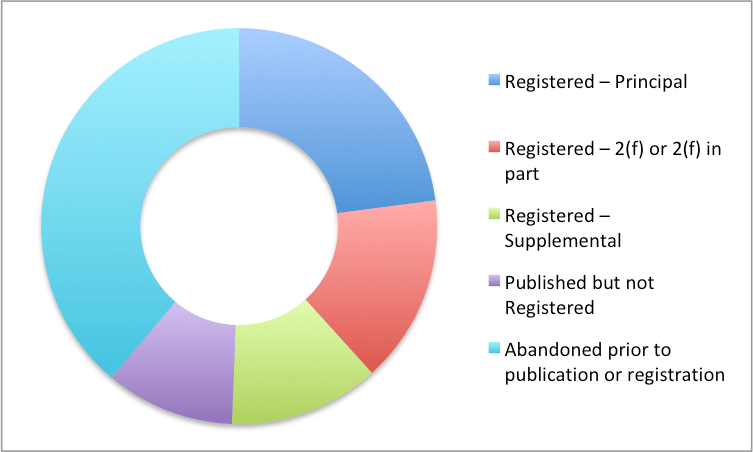
surname_outcomes

1. Whether a Term is Rare

Whether a term is “extremely rare” depends on the facts. TMEP 1211.02(b)(i). The Trademark Trial and Appeal Board has found that 456 instances of a surname in the United States were “extremely rare” and unlikely to be perceived as a surname by customers. In re Joint-Stock Company “Baik”, 84 USPQ 2d 1921, 1923 (TTAB 2007). Using TM TKO’s Office Action research tools, it’s quick to find other examples of refusals based on low numbers being overcome, such as HOSS (100 times), AQUARO (a bit more than 100 times), FAUCHER (40 times), and more. Some of these refusals are frankly pretty bad – HOSS, in particular, has an obvious “recognized meaning other than as a surname” and should never have generated a 2(e)(4) refusal.

Strange surname refusals are surprisingly common. ZENGAGE, LONGFRI, MAGOS, VIVINO, JARDINE, and even ADEPTUS generated a surname inquiry (if not outright refusal). The consistency of the surname refusal examination appears to leave something to be desired, especially as applied to foreign terms that are primarily understood as normal words rather than surnames.

2. Whether a Term has a Recognized Meaning other than a Surname

By using TM TKO’s free-text Office Action Response search and TTAB case research, we can identify a few interesting types of “recognized meanings” that the Examining corps has accepted.

– It is a surname, but one that primarily has historical import. See, e.g., a successful Office Action Response for MEDICI, Ser. No. 86724819, a successful Office Action Response arguing that CASSINI suggests the scientist behind a mapping system and not a likely surname of the provider, Ser. No. 85523416, and a successful TTAB appeal for ROMANOV, In re The Hyman Companies Inc., Ser. No. 85483695 (TTAB June 4, 2015) (not precedential). The applicant for VICKERS for gin even successfully argued that a name based on two early 19th century distillers of the same name was sufficiently historical, Ser. No. 86365318.

– The term is also used as the identifier for a city or geographic region. See, e.g., a successful Office Action Response for STRATTON, Ser. No. 85299672. These arguments are always somewhat funny to me for two reasons. First, they point to potentially different grounds for a 2(e) refusal. Second, the cities or counties (or business names) that applicants are using as evidence tend themselves to be based on or derived from surnames. However, these types of arguments are frequently successful.

– Pointing out that a term is both a surname and a given name is frequently successful, e.g. in responses for HAYDEN’S BAR AND GRILL, Ser. No. 77818198, and a successful response for CONNELLY, Ser. No. 85583934.

Need to do More Research?

If you need more specialized research to overcome a surname refusal, please log in and start searching if you are already a client or sign up for a free trial if not. Either way, please don’t hesitate to reach out to us for any questions or research help.

Trademark Protections for Podcasts

Inspired by last week’s blog about clearance searches, which used the podcast “Cocaine and Rhinestones” as an example, I was curious about how frequently major podcasts were seeking protection for their names. To do so, I reviewed the top 100 podcasts on iTunes as of today. That won’t identify the 100 most enduringly popular podcasts, but it’s fine as a snapshot of a large group of successful podcasts.

Pod_by_app

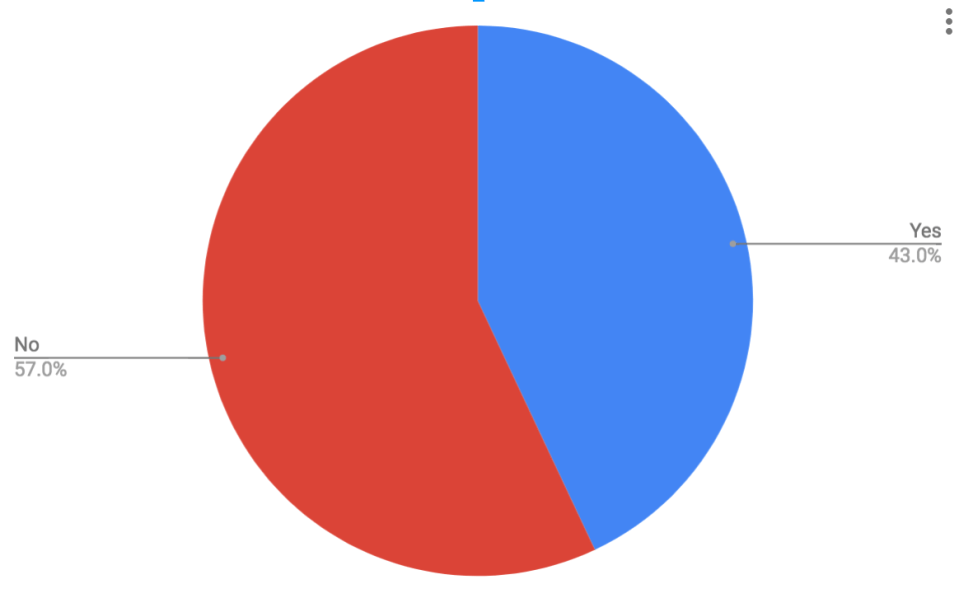
Under half of this select group – 43% – have active pending trademark applications or trademark registrations with the USPTO. The most active filers are larger media organizations or those longstanding radio shows like NPR, TED, or the Dave Ramsey Show. More independent podcasts were considerably less likely to have filed.

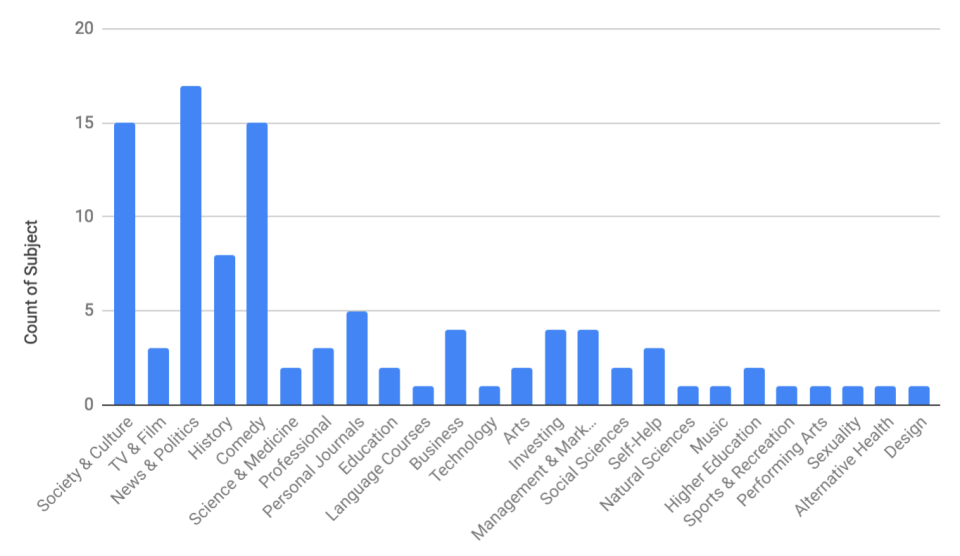
Apple’s categorizations are a bit more rigorous than randomly assigned numbers, but not much, so the “Subject” category is all over the map. True crime podcasts seem to fall into one of about six categories, and many others are almost as arbitrary. For a representative example, TED Talks Daily is in Education, and TED Radio Hour in Technology.

Pod_by_topic

Full data is included below. This is just a snapshot of the current iTunes top 100, which is almost certainly not representative of podcasts across the board. These are likely to be larger and more successful, and thus more likely than average to be the subject of trademark filings. Some of these with earlier registration dates are registered for radio services or something very closely related; they’re still included below. Interestingly, a few newer independent podcasts filed applications that included a bunch of merchandising goods but not the podcast proper. It’s possible that that lines up more directly with the podcaster’s revenue, but, at least as of 2015, advertisers paid a premium for podcast listeners over traditional radio listeners, and the total podcast advertising market has only grown since then.

Rank Podcast Subject Filed Counsel
1 Oprah’s Master Class: The Podcast Society & Culture Abandoned

86535938

Filed 2015

Jessica Rothstein
2 Fatal Voyage: The Mysterious Death of Natalie Wood TV & Film No  
3 The Wilderness News & Politics Abandoned

86720837

 
4 Dan Carlin’s Hardcore History History 5334719

Filed 2017

Frank Curci
5 The Joe Rogan Experience Comedy No  
6 The Daily News & Politics 87791592 Jordan LaVine
7 Armchair Expert with Dax Shepard Comedy No  
8 Getting Curious with Jonathan Van Ness Society & Culture No  
9 Stuff You Should Know Society & Culture 3983155

Filed 2011

Jim Vana
10 Hidden Brain Science & Medicine 4042777

Filed 2010

 
11 VIEWS with David Dobrik and Jason Nash Comedy No  
12 Serial News & Politics 86454424

86464485

86454420

Filed 2014

Sean Fifield
13 Revisionist History Society & Culture 5259072

Filed 2016

 
14 My Favorite Murder with Karen Kilgariff and Georgia Hardstark Comedy 5519542

Filed 2017

Merchandise

Justin Sobodash
15 Pull Up with CJ McCollum Professional No  
16 Kickass News News & Politics No  
17 This American Life Personal Journals 2266765 and more

Filed 1998

Sean Fifeld
18 TED Talks Daily Education 3766908

and more

Filed 2009

Alan Taboada
19 Minutes to Freedom: A Warrior’s Daily Focus on Journals and Meditations Personal Journals No  
20 Duolingo Spanish Podcast Language Courses 4588574

Filed 2014

Perry Viscounty
21 Blinking Red – The Dan Rather Podcast News & Politics No  
22 Up and Vanished News & Politics No  
23 Oprah’s SuperSoul Conversations Society & Culture 87907738

Filed 2017

Tamara Carmichael
24 S-Town Personal Journals 5323056

5323149

Filed 2017

Sean Fifeld
25 How I Built This with Guy Raz Business 5306698

Filed 2017

Janet Cullum
26 Freakonomics Radio Society & Culture 3954795

Filed 2010

Peter Fields
27 TED Radio Hour Technology 3766908

and more

Filed 2009

Alan Taboada
28 Pod Save America News & Politics 5402998

Filed 2017

Monica Richman
29 The Ben Shapiro Show News & Politics 87743876

Filed 2018

 
30 Up First News & Politics 87377209

Filed 2017

Janet Cullum
31 RISE podcast Business No  
32 Aaron Mahnke’s Cabinet of Curiosities History No  
33 In the Dark News & Politics No  
34 Fresh Air Arts 1683293

Filed 1992

Malcolm Stevenson
35 Something You Should Know Society & Culture No  
36 The Dave Ramsey Show Investing 3145275

3233048

Filed 2005/6

Matt Blackburn
37 Everything is Alive Society & Culture No  
38 Lore History No  
39 Business & Biceps Management & Marketing No  
40 Sword and Scale Social Sciences 5216335

Filed 2016

Heather Sapp
41 Planet Money Business 3734960

Filed 2008

Janet Cullum
42 Nobody Told Me! Self-Help No  
43 Chicks in the Office Society & Culture 87663301

Filed 2017

Elizabeth Sbardellati
44 RISE Together Self-Help 87958397

Filed 2018

Pattie Christensen
45 Radiolab Natural Sciences 3943633

Filed 2010

 
46 Wait Wait…Don’t Tell Me! Comedy 2248094

Filed 1997

Janet Cullum
47 Broken Record Music 88049023

88049021

Filed 2018

Dan Zupnick
48 Shane And Friends Comedy No  
49 Dirty John Personal Journals No  
50 The Good Life with Stevie & Sazan Society & Culture No  
51 Last Podcast On The Left Comedy No  
52 Household Name Business No  
53 Criminal Personal Journals No  
54 Where Should We Begin? with Esther Perel Society & Culture No  
55 Stuff You Missed in History Class History No  
56 The Jordan B. Peterson Podcast Higher Education No  
57 Pardon My Take Sports & Recreation 5269331

5156241

Filed 2016

Jesse Saivar
58 Small Doses with Amanda Seales Comedy No  
59 Cover-Up History No  
60 House of Kim with Kim Zolciak TV & Film Ni  
61 Clear+Vivid with Alan Alda Society & Culture 87639462

87199505

87507635

Filed 2017

Patrice Jean
62 Entrepreneur Stories   Inspiration: Millionaire Interviews Higher Education No  
63 The Gary Vee Audio Experience Management & Marketing 5422311

Filed 2017

Merchandise

David Gold
64 The Tony Robbins Podcast Education 4154395

Filed 2009

John Alspaugh
65 The RFK Tapes History No  
66 The Moth Performing Arts 2674258

Filed 1997

n/a
67 Someone Knows Something News & Politics No  
68 The News & Why It Matters News & Politics No  
69 The Peter Schiff Show Podcast Investing No  
70 NPR Politics Podcast News & Politics 1053082 etc

Filed 1975

Janet Cullum
71 Passive Real Estate Investing Investing No  
72 Slow Burn History No  
73 Invisibilia Science & Medicine 4847419

Filed 2014

Janet Cullum
74 Whine Down with Jana Kramer TV & Film No  
75 Monday Morning Podcast Comedy No  
76 WTF with Marc Maron Podcast Comedy No  
77 Your Art Sucks Arts No  
78 The Tim Ferriss Show Investing No  
79 Fantasy Focus Football Professional No  
80 Freedom Empowered Society & Culture No  
81 Inappropriate Earl Comedy No  
82 Fantasy Footballers – Fantasy Football Podcast Professional 4943334

Filed 2015

 
83 Brown Chicken Brown Cow Podcast Sexuality No  
84 Sleep With Me | The Podcast That Puts You To Sleep Alternative Health 5373936

Filed 2017

Quinn Heraty
85 The Rachel Maddow Show News & Politics No  
86 Guys We F****d Comedy No  
87 The Breakfast Club Comedy 2137981 etc

Filed 1996

Lesia Skrypoczka
88 % Invisible Design No  
89 The Teacher’s Pet News & Politics No  
90 Happier with Gretchen Rubin Self-Help No  
91 Casefile True Crime History No  
92 Atlanta Monster Society & Culture No  
93 Jocko Podcast Management & Marketing 87895857

Filed 2018

Charles Halloran
94 Anna Faris Is Unqualified Comedy 87120326

Filed 2016

Merchandise

Kenneth Feinswog
95 Serial Killers Society & Culture No  
96 Curious with Josh Peck Comedy No  
97 Crimetown News & Politics 87977821

87228301

Filed 2016

Douglas Wolf
98 Why Is This Happening? with Chris Hayes News & Politics 87866775

Filed 2018

David Hazlehurst
99 The Goal Digger Podcast – Marketing, Social Media, Creative Entrepreneurship, Small Business Strategy and Branding Management & Marketing No  
100 The Science of Happiness Social Sciences No